Rebuilding a fintech MVP on Laravel and Vue
A fintech startup had an MVP that proved the idea but could not carry real load. What we rebuilt, what we used, and what we would do the same way again.
- Written by
- Jareer Zeenam, Technical Lead
- Published
- Reading time
- 1 min read
Where it started
A fintech startup came to us with an MVP that had done its first job: it proved people wanted the product. It had been built quickly, and it showed. Pages slowed down as data grew, access rules were thin, and nobody was comfortable putting real transactions through it.
We have not named the client here. This post is about the engineering decisions, which apply to most first versions that need to grow up.
What we rebuilt
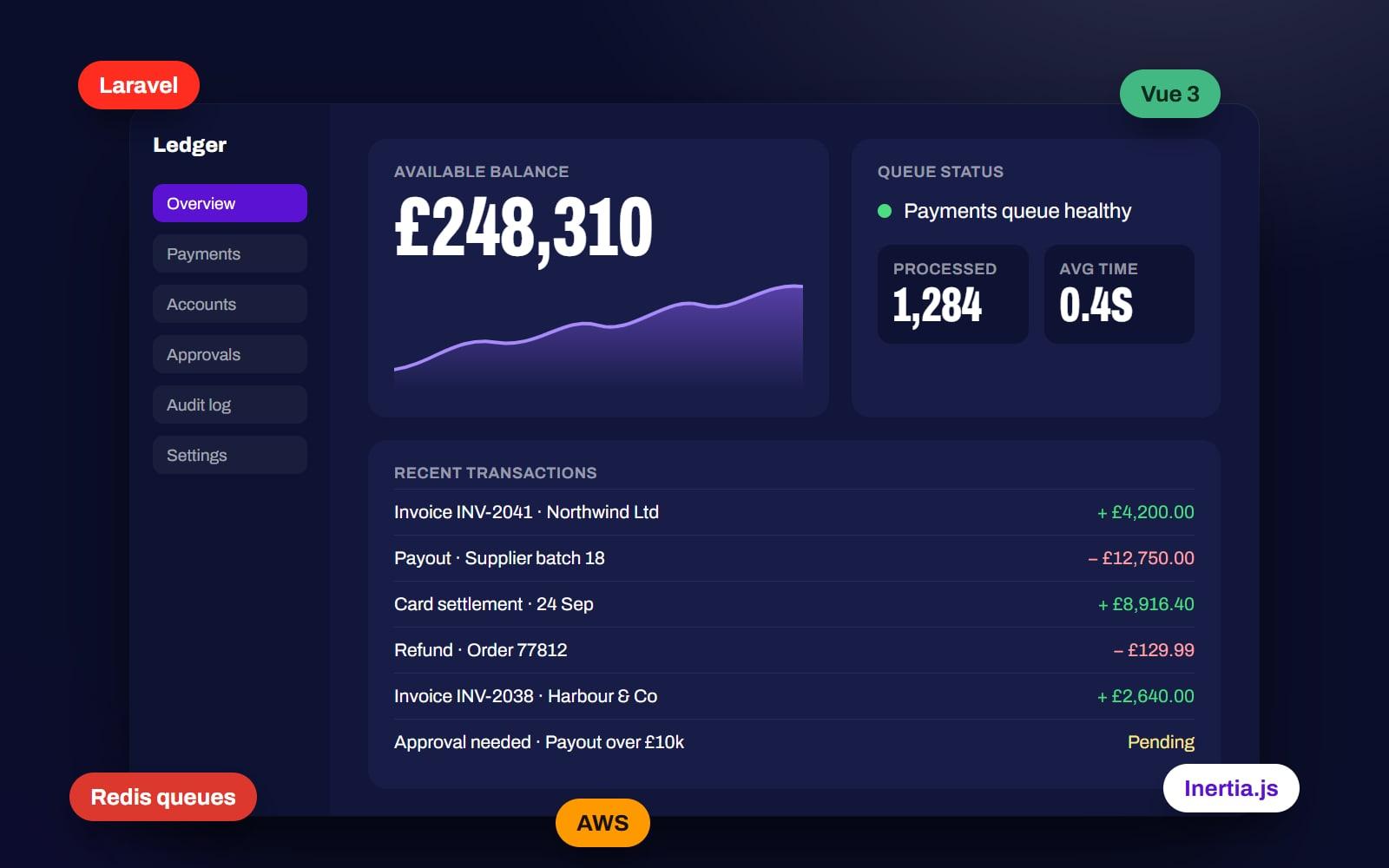
We kept the product and replaced the foundations. The backend moved to Laravel, with Vue 3 on the front end, joined by Inertia.js so the team could keep one codebase and one deployment. Redis took over caching and queued work, and the application runs on AWS with automated deployments.
What that covered
- Sign-in and permissions rebuilt on Laravel's own authentication and policies.
- Transaction updates moved onto Redis queues so the interface stays responsive while work runs in the background.
- Infrastructure defined once and deployed the same way every time.
- Automated tests written with Pest.
What we would do again
Rebuild in slices where you can, so there is always a working product, and test the parts that move money before anything else. That is where a mistake is expensive.
If you have a first version that needs the same treatment, see our MVP development and Laravel development pages, or book a call.